
The short answer
What this setting controls
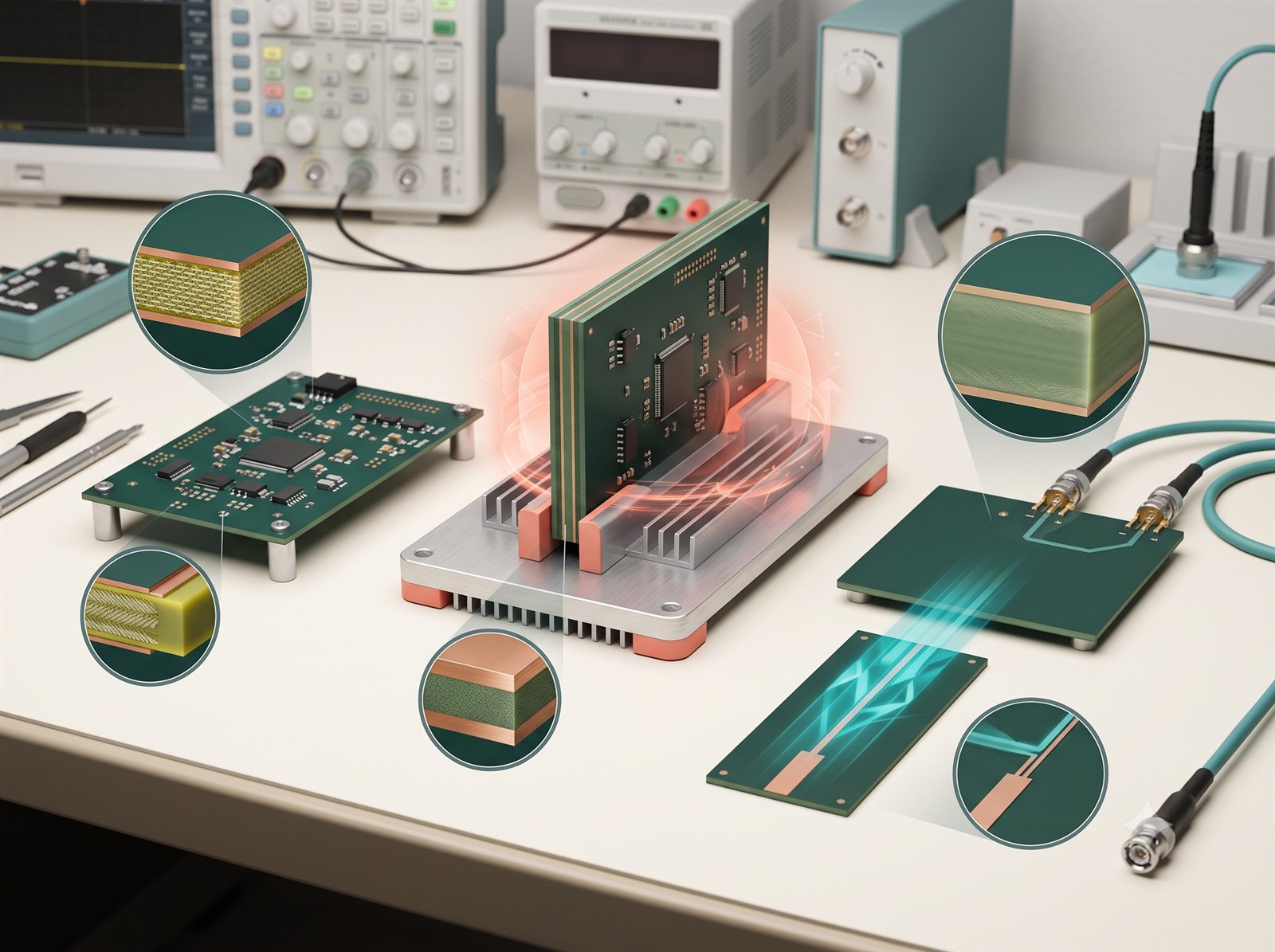
The default material type is usually suitable for an ordinary board. More specialised grades can improve thermal margin or high-speed behaviour, but they need a reason in the design.
Match the grade to Tg, Td, Dk, Df, CTE, copper adhesion, moisture behaviour, loss budget and the stack-up used in simulation. Do not substitute a different grade without checking the model.
Options in the order form
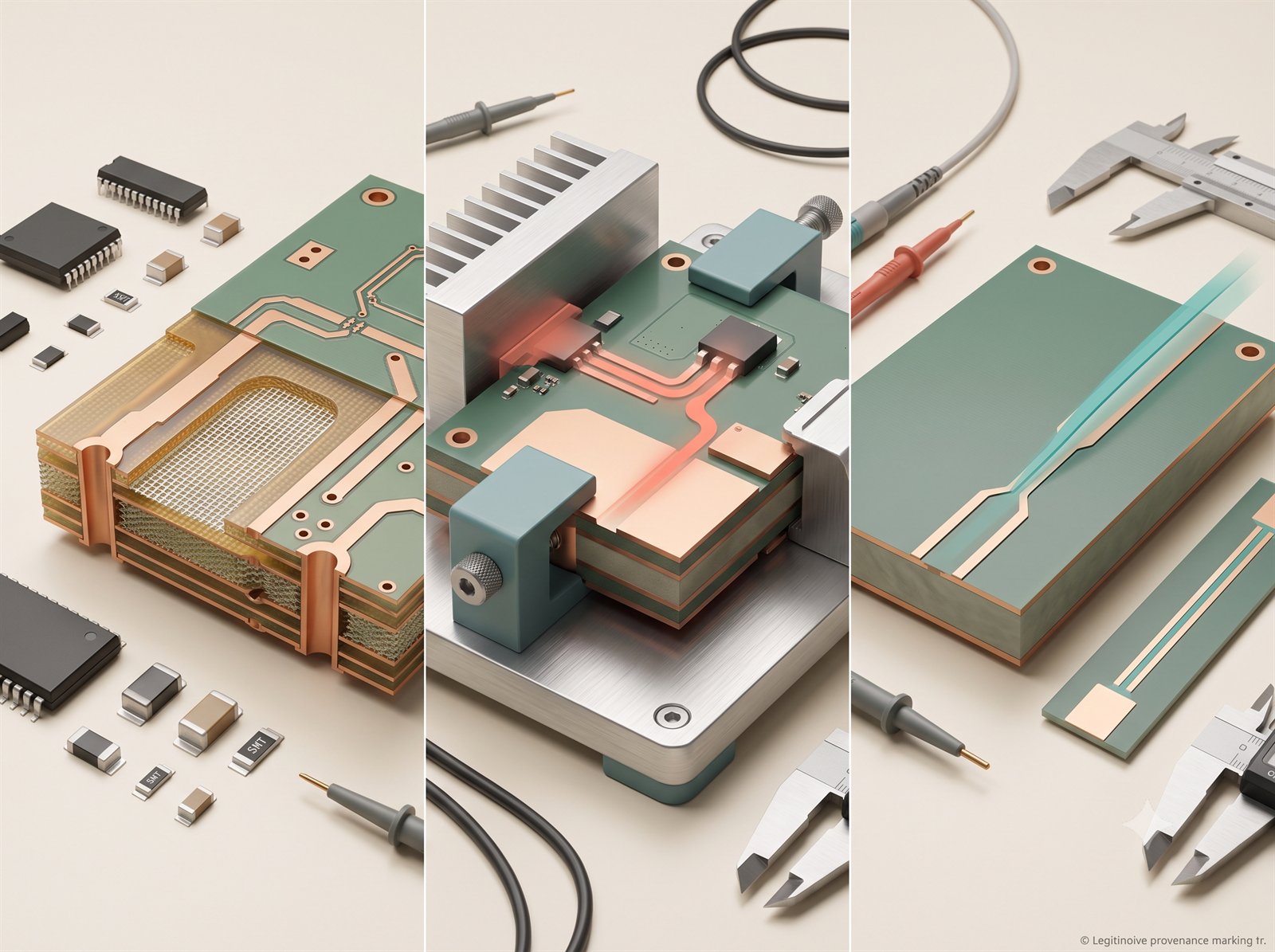
How the available choices differ
| Choice | Use it for | Engineering note |
|---|---|---|
| Standard Tg laminate | General prototypes and commercial builds | Suitable when thermal cycle, loss and reliability evidence do not require a named higher grade. |
| Higher Tg laminate | Higher thermal margin or repeated lead-free processing | Check Td, CTE and the complete laminate datasheet, not Tg alone. |
| Low-loss / RF grade | High-frequency or long high-speed channels | Use the laminate Dk/Df model and stack-up used in simulation. |
Compatibility
What can change with this selection
- Layer count, thickness and copper weight can filter the available grades.
- A label is not a substitute for the final laminate datasheet and stack-up approval.
- If the page disables a choice, treat it as a compatibility result and adjust the controlling design decision rather than forcing the value.
Practical recommendation
How to make the decision
- Keep the default grade for a normal prototype unless the schematic or layout specifies otherwise.
- Use a higher-Tg or RF grade when the design evidence supports it.
- Record the required grade in the fabrication drawing or special instructions.
Before release
Check these points before adding the quote to cart
- Confirm the selected value matches the released Gerber, drawing, stack-up, BOM or assembly plan.
- Review any fields that changed automatically after this selection.
- Check the board preview and server-calculated estimate before adding the quote to cart.
- Keep the default grade for a normal prototype unless the schematic or layout specifies otherwise.
- Use a higher-Tg or RF grade when the design evidence supports it.
- Record the required grade in the fabrication drawing or special instructions.
Frequently asked questions
Answers for ordering and design review
Is a higher Tg always better?
Not necessarily. It can add cost or process constraints; select it when temperature, reliability or lead-free processing requires the margin.
When should I change Material type?
Change it when the released electrical, mechanical, thermal, assembly or quality plan gives a measurable reason. Otherwise keep the compatible default and review the resulting board preview and estimate.
Why is an option disabled?
The current material, geometry, layer count, quantity or another selected process makes that combination unavailable. Change the controlling selection or revise the design package rather than trying to bypass the disabled state.
Can I rely on the online choice as final manufacturing approval?
No. The interface screens known combinations and requests pricing, while final manufacturability remains subject to the released files and technical review.
What should I record outside the order form?
Put controlled requirements in the fabrication drawing, assembly drawing, stack-up, BOM or acceptance plan. Use Special instructions only for a concise pointer to that controlled requirement.
Will changing this update other selections?
It can. The order form re-evaluates compatibility and may replace a now-invalid dependent choice before requesting a fresh server-side estimate. Review every highlighted or automatically changed field.
What if the design requires an option that is not offered?
Do not approximate it with a different label. Recheck the controlling material and geometry, document the actual requirement, and request technical review before placing the order.
Useful engineering tools
Calculators and preparation guides
Further reading
Standards and technical references
Use the latest applicable revision and your organisation’s controlled requirements when a standard forms part of product acceptance.
- IPC design standards overviewIPC — Rigid, flex, HDI, RF and current-carrying design-standard families.
- TI high-speed layout guidelinesTexas Instruments — Return paths, layer transitions, vias and transmission-line effects.
- DuPont Pyralux flexible-circuit materialsDuPont — Flexible-circuit material families and application context.
- Rogers technical support hubRogers Corporation — High-frequency laminate data, papers and calculators.