Choose technology by the responsibility it needs to carry.
Hardware, embedded firmware, connectivity and intelligence are connected choices. Start with the product requirement and operating constraints, then decide which system layer should handle each responsibility.
Connect the technology to a product scope.
Electronics and embedded behaviour
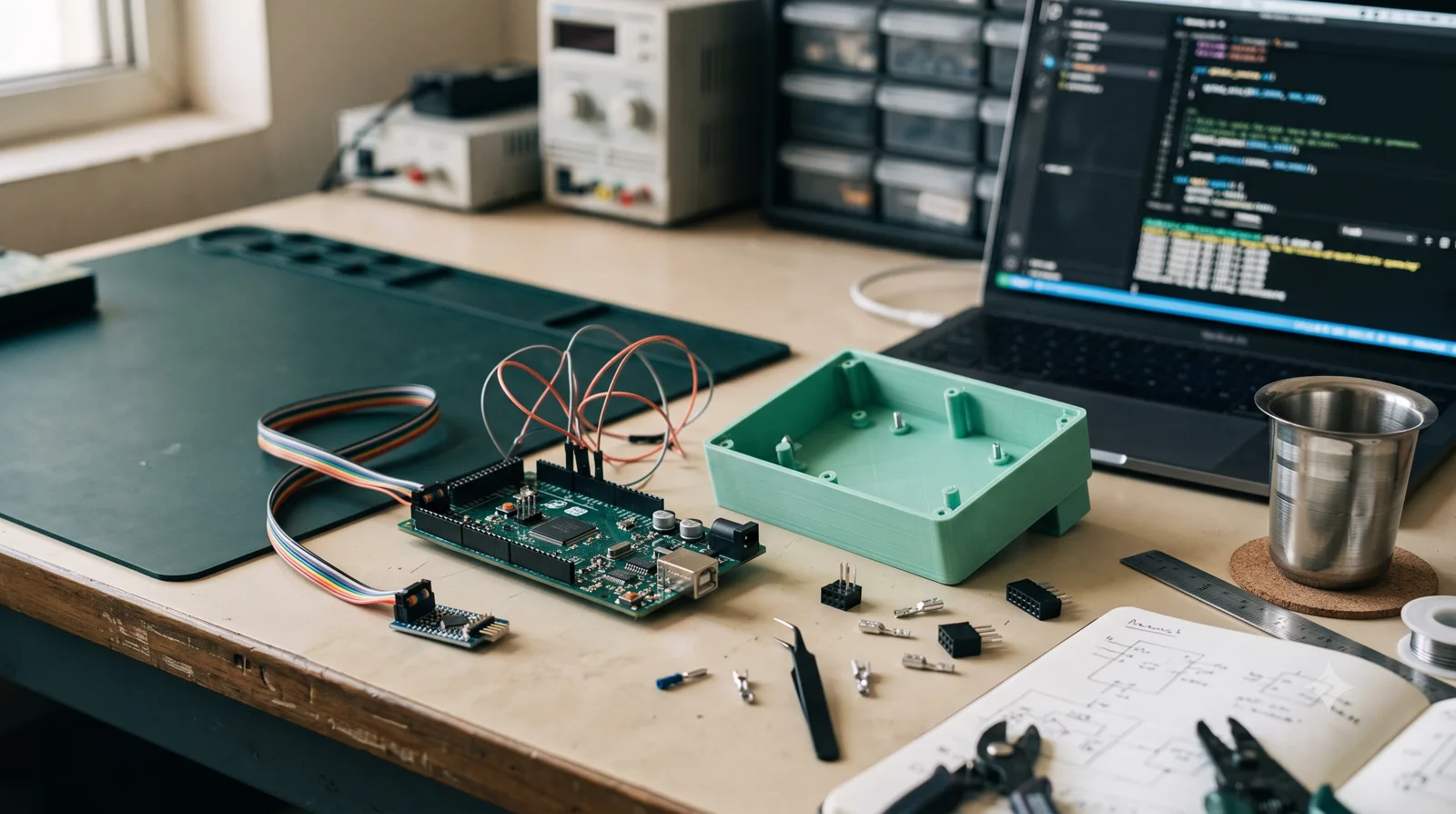
Electronics provides the physical functions and interfaces; firmware makes the device respond as intended. Their boundary should be explicit so requirements, operating states and later changes can be reviewed together.
- Circuit and PCB requirements
- Device functions and state behaviour
- Sensors, controls and physical interfaces
- Hardware/firmware integration
Connectivity, data and inference
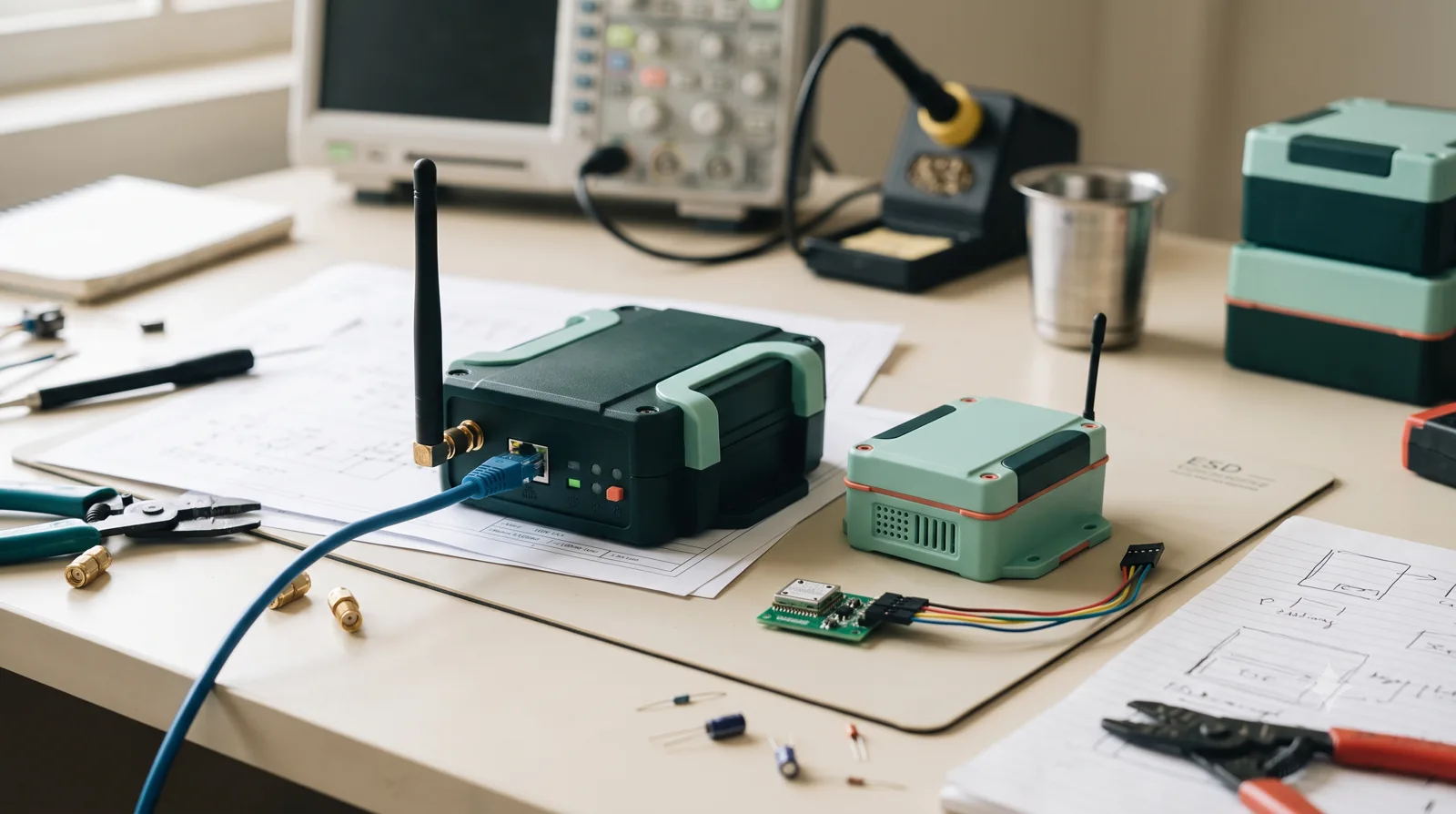
Decide what the device needs to communicate, what belongs on a platform and where analysis should run. IoT, AI/ML and Edge AI are related but distinct scopes. The available data and operating decision should guide the choice.
- Device-to-platform information flow
- Identity and communication boundaries
- Model and data responsibilities
- Local versus wider-system processing
Validation and lifecycle constraints
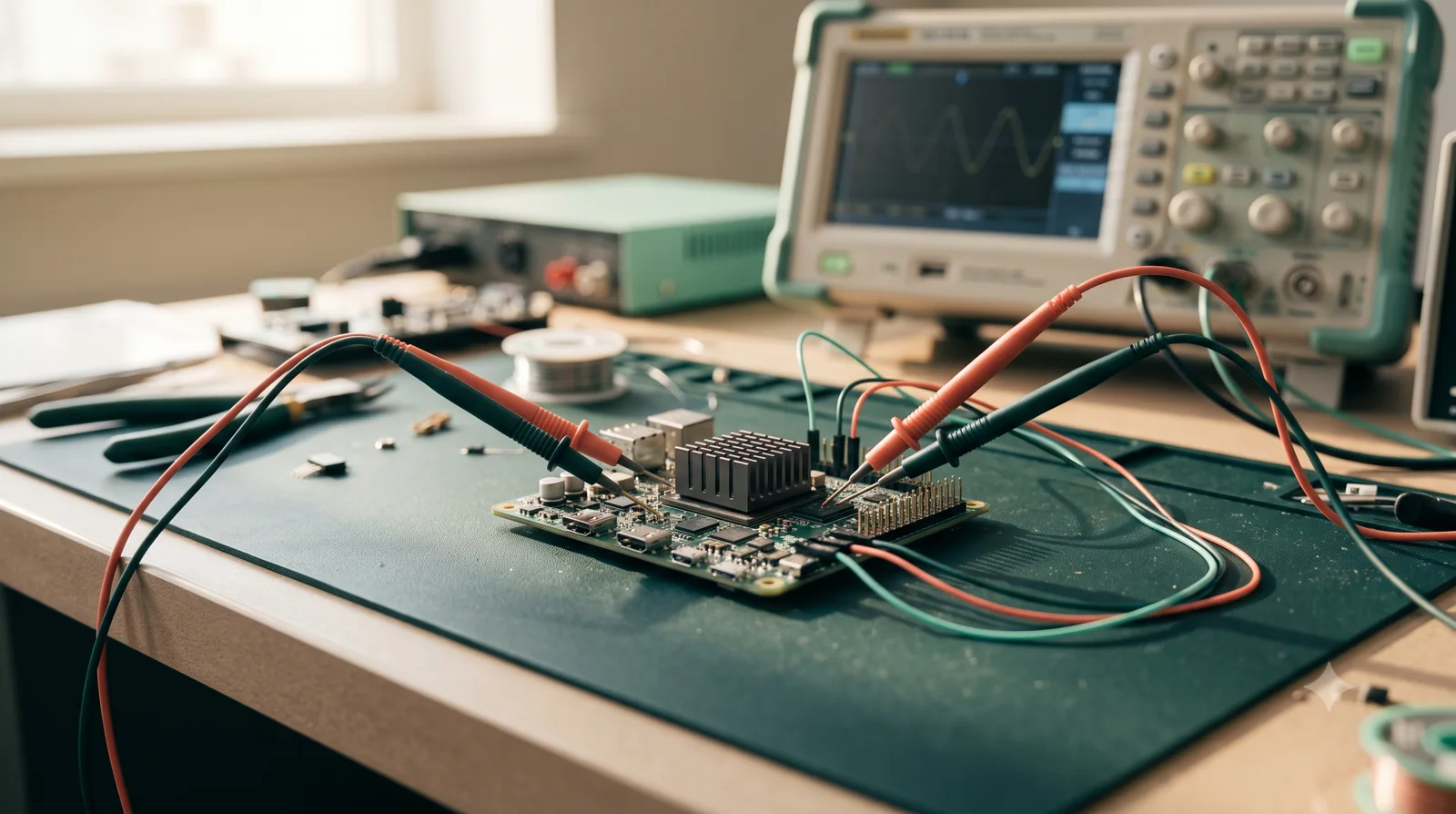
Power, environment, maintenance, component availability and future updates affect the technology path. Plan which evidence is needed to assess the architecture and what information the team needs after the first release.
- Operating and resource constraints
- Useful evaluation and validation
- Manufacturing and support information
- Future change and update responsibilities
Questions about the next step
How should we choose a technology stack?
Start with product behaviour, interfaces, operating conditions and support requirements. Compare the available technology against those constraints and the evidence needed for the next milestone.
When should inference run locally?
Assess response time, connectivity, privacy, power, hardware and maintenance needs. Edge AI evaluates the local runtime with the model and surrounding product system.
Continue your project
Make the next milestone a useful one.
Tell us what exists today, what needs to change and the decision your team needs to make. We’ll connect the discussion with the relevant engineering scope.