Find the discipline behind the product decision.
Capabilities are most useful when their responsibilities are clear. Explore how architecture, electronics, firmware, connectivity, intelligence and manufacturing can fit within an agreed product scope.
Compare the engineering scopes.
Choose by the responsibility your next milestone needs. Each service explains its inputs, outputs to agree and related routes.
Turnkey product development
Coordinate the complete product across engineering disciplines and review points.
Explore this serviceElectronics design and manufacturing
Connect circuit and PCB decisions with components, bring-up and manufacturing information.
Explore this serviceElectronic product design and development
Make hardware, firmware and interfaces deliver the required product behaviour.
Explore this serviceIoT and AIoT development
Connect devices, communications and platforms around the information people need.
Explore this serviceAI and ML development
Assess the data, model and evaluation behind a useful system decision.
Explore this serviceEdge AI development
Review local inference together with hardware, runtime and operating constraints.
Explore this serviceIndustrial automation and monitoring
Connect equipment signals, monitoring, controls and operator requirements.
Explore this servicePrototyping and manufacturing
Turn prototype findings into a planned pilot and a more repeatable build.
Explore this service
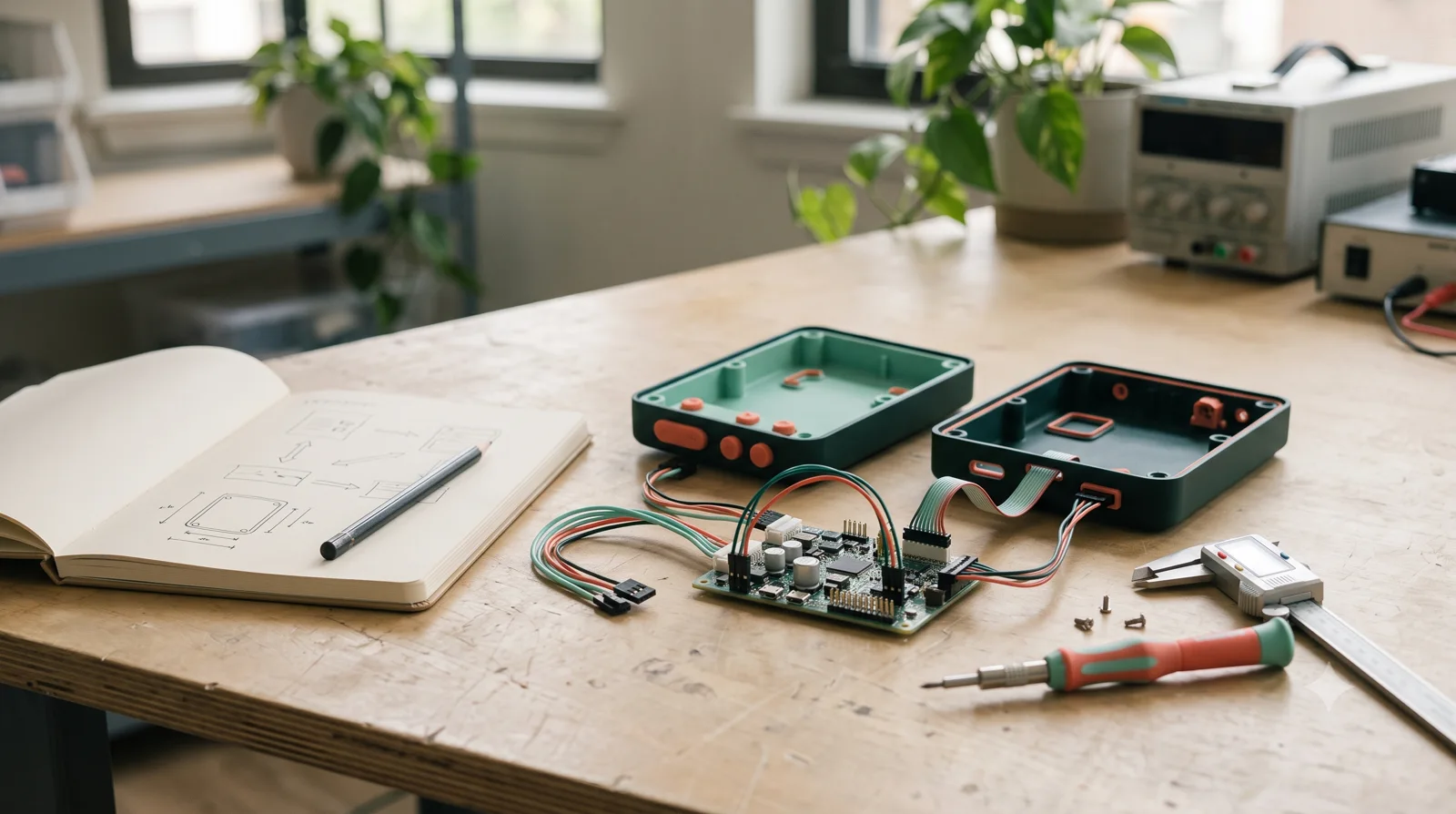
Architecture and physical integration
Turn the product function, operating conditions and interfaces into an understandable system boundary. The architecture connects electronics, embedded behaviour and physical integration, then identifies which questions the next prototype should answer.
- Product and system requirements
- Hardware/firmware/mechanical interfaces
- Prototype integration questions
- Review outputs and responsibilities
Electronics, firmware and connectivity
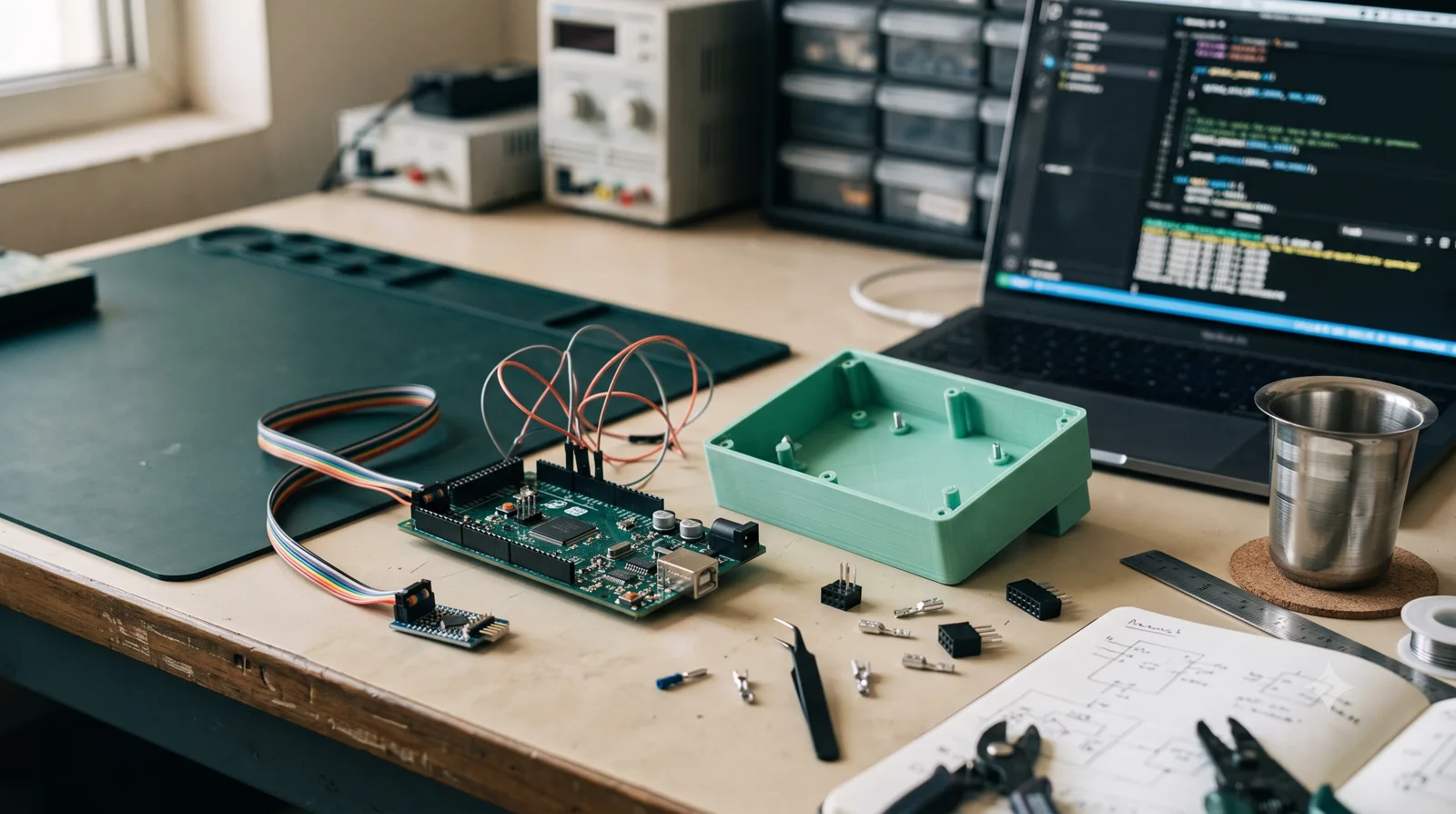
Circuit and PCB decisions, device behaviour and communications influence one another. Choose a focused workstream where the need is clear, or coordinate them through product development when the challenge sits between disciplines.
- Schematic and PCB design
- Embedded functions and interfaces
- Device-to-platform responsibilities
- AI/model work where the requirement supports it
Validation and manufacturing responsibilities
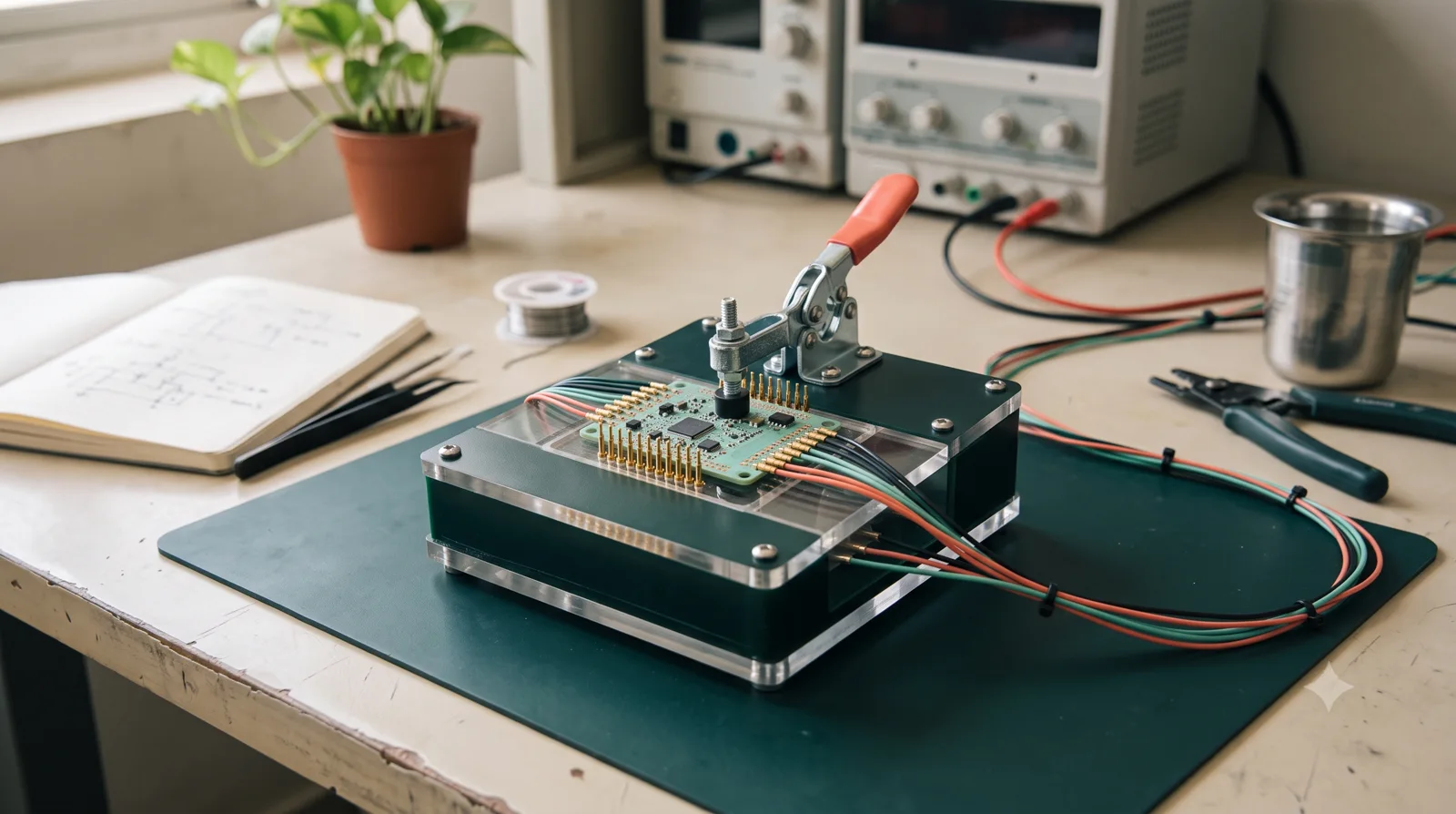
A product needs a useful route to testing, assembly and future change. Agree what will be checked, what the build requires and what information passes to the next team. These responsibilities should be part of the scope rather than an afterthought.
- Prototype and system checks
- Manufacturing and assembly information
- Test access and repeatability
- Agreed release and handover package
Questions about the next step
How are electronics and embedded product development different?
Electronics design focuses on the board, circuits, components and manufacturing information. Embedded product development connects product architecture, hardware interfaces, firmware behaviour and integration.
When should several capabilities be coordinated?
Use the turnkey route when the next milestone needs work across disciplines and shared interface or review responsibilities. The project scope defines which capabilities are included.
Continue your project
Make the next milestone a useful one.
Tell us what exists today, what needs to change and the decision your team needs to make. We’ll connect the discussion with the relevant engineering scope. Use our engineering resources and project-brief guidance to prepare the starting information.