Product development process.
A useful development process makes the work between milestones visible. You can enter with a requirement, existing design or prototype; the scope should identify the starting evidence and what the next stage must establish. Our engineering questions and answers explain common scope and review decisions along the way.
Discover
- Inputs
- Product function, users, available evidence and constraints.
- Review
- Confirm the problem, system boundary and important assumptions.
- Outputs
- Agreed requirement, initial scope and next decision.
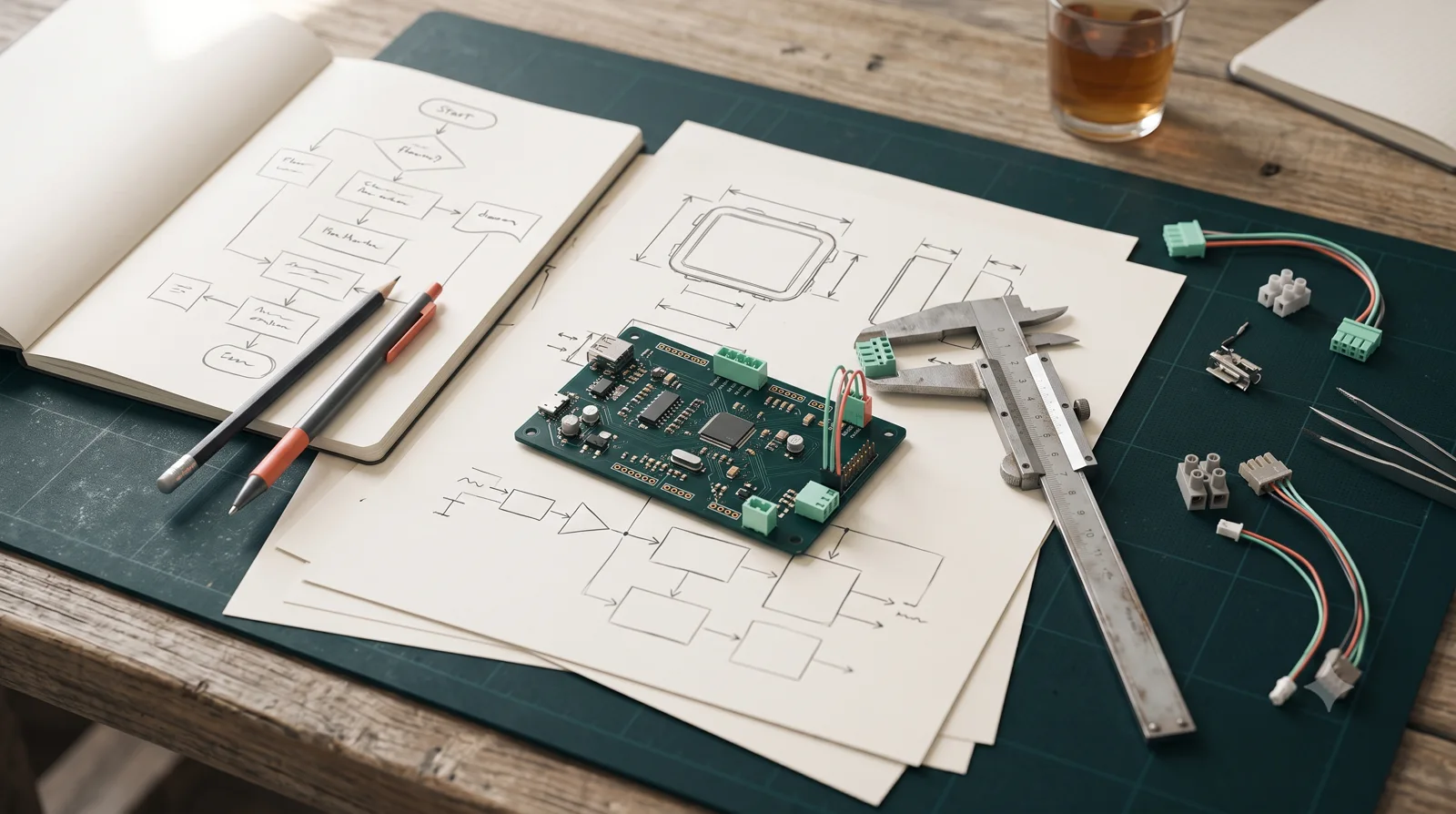
Design
- Inputs
- Agreed requirements, interfaces and design information.
- Review
- Architecture, schematic/PCB, firmware and physical-interface decisions as scoped.
- Outputs
- Reviewed design information and prototype/build questions.
Prototype
- Inputs
- Available design versions, components and the learning objective.
- Review
- Functional and integration behaviour of the agreed prototype.
- Outputs
- Prototype findings, limitations and revision priorities.
Validate
- Inputs
- Requirements, identifiable configuration and agreed checks.
- Review
- Evidence from the relevant operating and test scenarios.
- Outputs
- Findings, remaining issues and the next release decision.
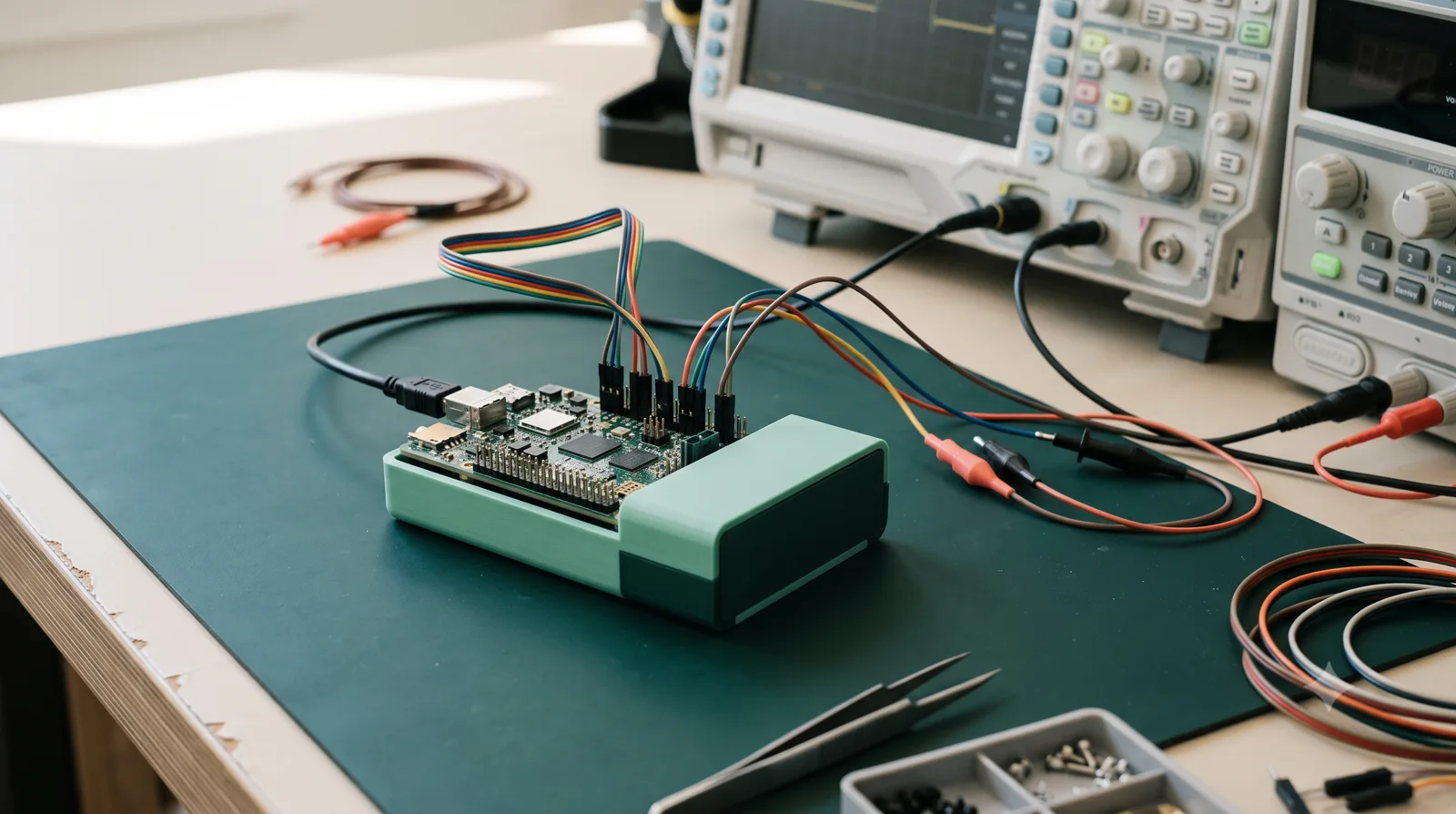
Prepare production
- Inputs
- Agreed design release, component/BOM and assembly/test information.
- Review
- Manufacturing handoff, pilot findings and unresolved build risks.
- Outputs
- Agreed release package and responsibilities for the next build.
Questions about the next step
Can we enter the process with an existing prototype?
Yes. Use the available design, configuration and test findings to establish what is known and which stage or review should come next.
What is recorded at a review point?
The useful record connects inputs, decisions, findings, limitations and agreed outputs. It should make the next responsibility or commitment clear.
Continue your project
Make the next milestone a useful one.
Tell us what exists today, what needs to change and the decision your team needs to make. We’ll connect the discussion with the relevant engineering scope.