Electronic Product Design and Development
A board is one part of a product. We define how the hardware, embedded firmware, interfaces and enclosure work together, then use prototype and validation work to understand the product behaviour that matters to its users and operating environment.
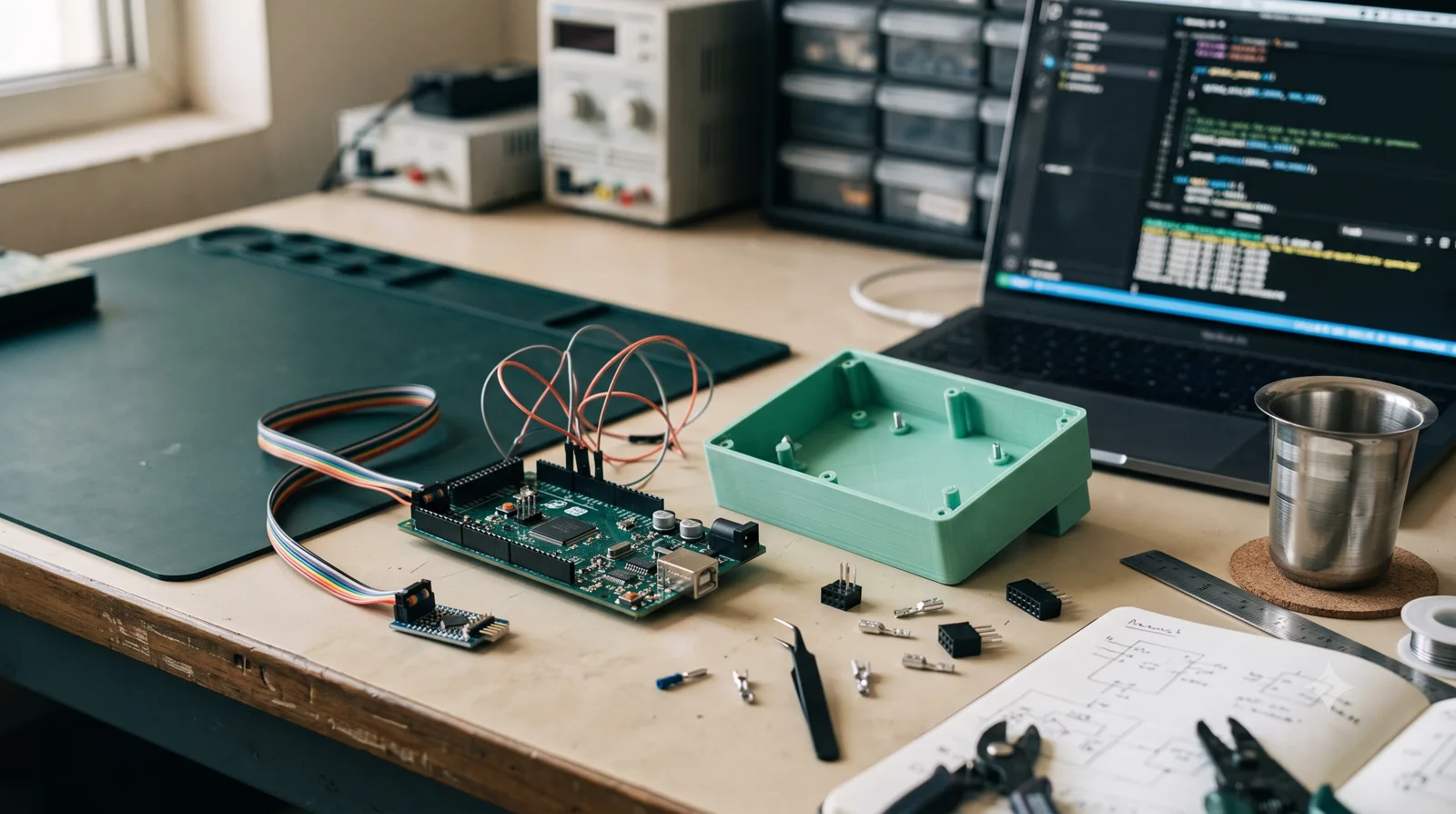
Give the embedded system a clear responsibility map
Define the product behaviour before splitting the work into hardware and firmware tasks. Consider user interactions, interfaces, operating states and what the product must do when an input or connection is unavailable. This turns a feature list into a development scope that can be reviewed.
- Product functions and state behaviour
- Hardware and firmware interface responsibilities
- Existing code and design information
- Questions the first integrated prototype must answer
Is this the right service for your project?
Choose this service for embedded product architecture, firmware behaviour and hardware interfaces. Turnkey development coordinates a wider programme; electronics design and Edge AI provide focused related workstreams.
Useful starting inputs
- Product functions and user interactions
- Hardware and firmware available today
- Interfaces, power states and operating environment
- Known failures and next release objectives
Outputs to agree in the scope
- Product requirement and interface definition
- Hardware/firmware responsibility map
- Embedded implementation and integration scope
- Requirement-based validation findings and next-release actions
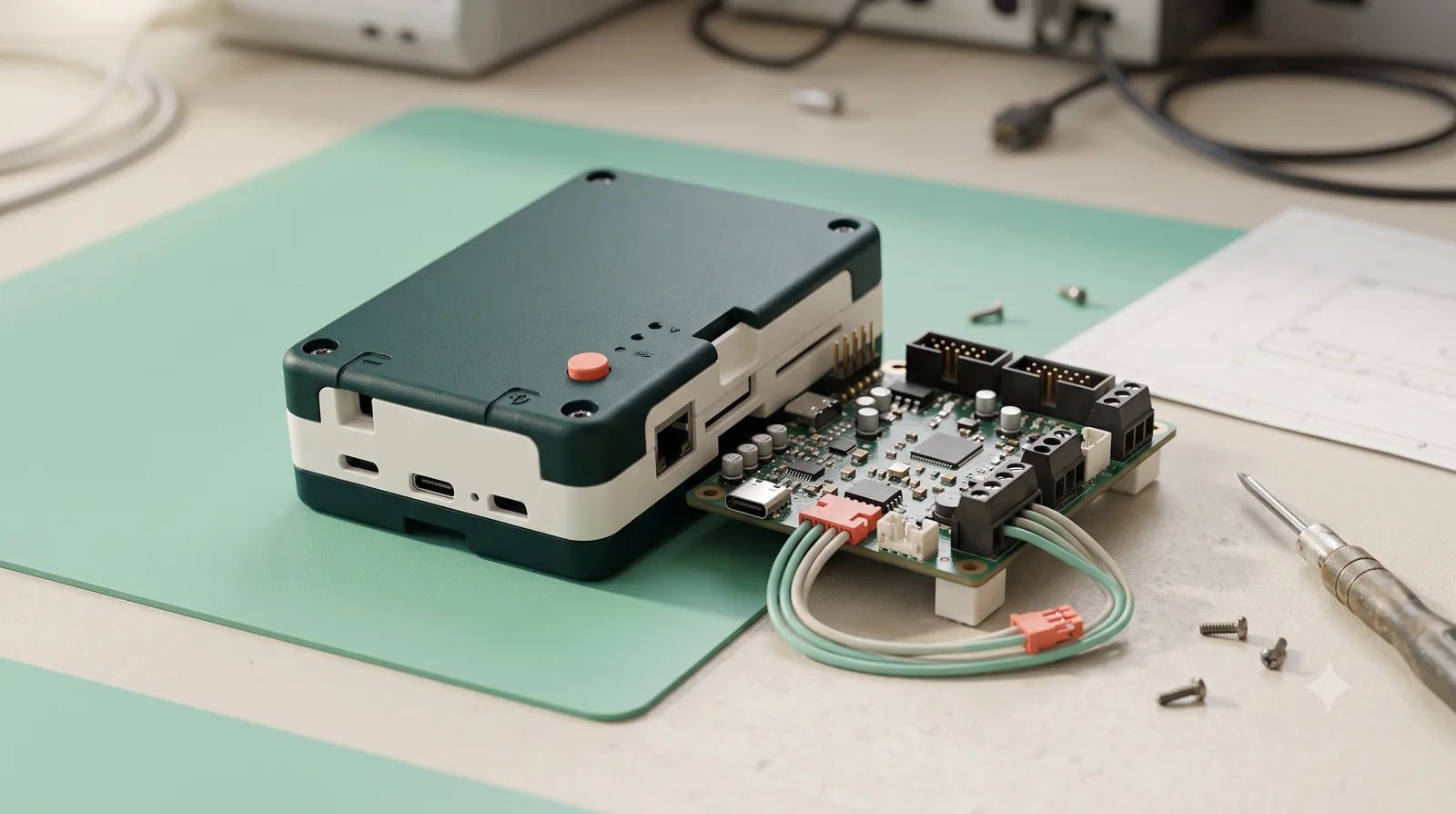
Connect the physical product and its interfaces
The enclosure, connectors, sensors and user controls shape how the embedded system can be assembled and used. Review these interfaces alongside the firmware and electronics so integration work is visible in the project plan.
- Physical access, mounting and connector needs
- Sensor, control and communication interfaces
- Assembly and future maintenance considerations
- Integration changes and their effect on the next build
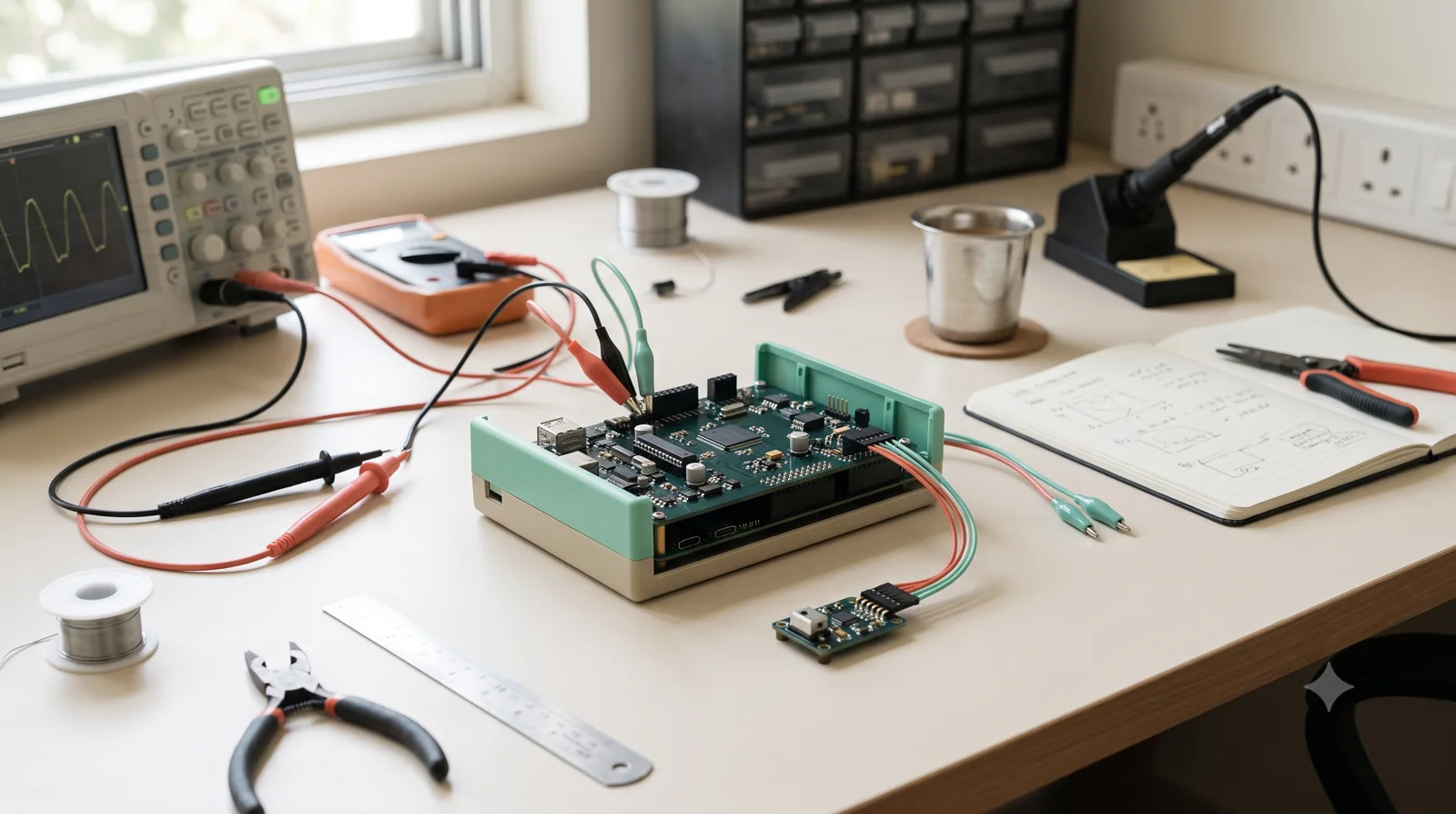
Validate the behaviour of the assembled product
Test planning should follow the functions the product needs to deliver. Agree useful operating scenarios, error and recovery behaviour, the evidence to record and the issues that must be resolved for the next release. Detailed test coverage and deliverables depend on the product and scope.
- Requirements linked to practical checks
- Normal, abnormal and recovery behaviour
- Hardware and firmware revision records
- Findings, limitations and next-release actions
Agree the next milestone and handoff.
The final scope defines the deliverables, review responsibilities and any third-party licence or ownership boundaries. Share the next milestone so the work can be scoped around a useful result.
Start with your project brief.
Share the current product stage, the work you need and the next milestone.
Questions about electronic product design and development
Can you develop firmware around an existing board?
Yes. Existing hardware, available code, interface requirements and known behaviour provide a starting point. The first review should identify hardware constraints and the firmware work needed for the next product milestone.
When is turnkey product development a better route?
Use the turnkey route when the engagement needs wider coordination across disciplines and the overall product programme. Embedded product development focuses on the product architecture, firmware, hardware interfaces and validation scope.
Can the product include IoT or local AI?
Connected behaviour or local inference can be part of the product where the requirement justifies it. IoT/AIoT and Edge AI provide related scopes for the device-to-platform flow and local inference constraints.
How should we describe a field issue?
Explain the expected behaviour, what occurs instead, the operating conditions, the hardware/firmware version and any observations. Those details help separate a reproducible issue from an assumption about its cause.
Continue your project
Make the next milestone a useful one.
Tell us what exists today, what needs to change and the decision your team needs to make. We’ll connect the discussion with the relevant engineering scope.