Assess an electronics partner through the evidence behind the build.
Reliability is easier to discuss when design responsibilities, build information, testing and change control are clear. Use practical questions to understand the proposed scope and how the partner would support your product.
Understand the engineering and manufacturing boundary
Clarify who handles the schematic, PCB, component decisions, firmware, assembly and test work. An organisation may cover some or all of those responsibilities. The useful comparison is the scope your product requires and how its interfaces will be managed.
- Who owns each workstream?
- What information is required to start?
- How are interface decisions reviewed?
- Which responsibilities are outside the quote?

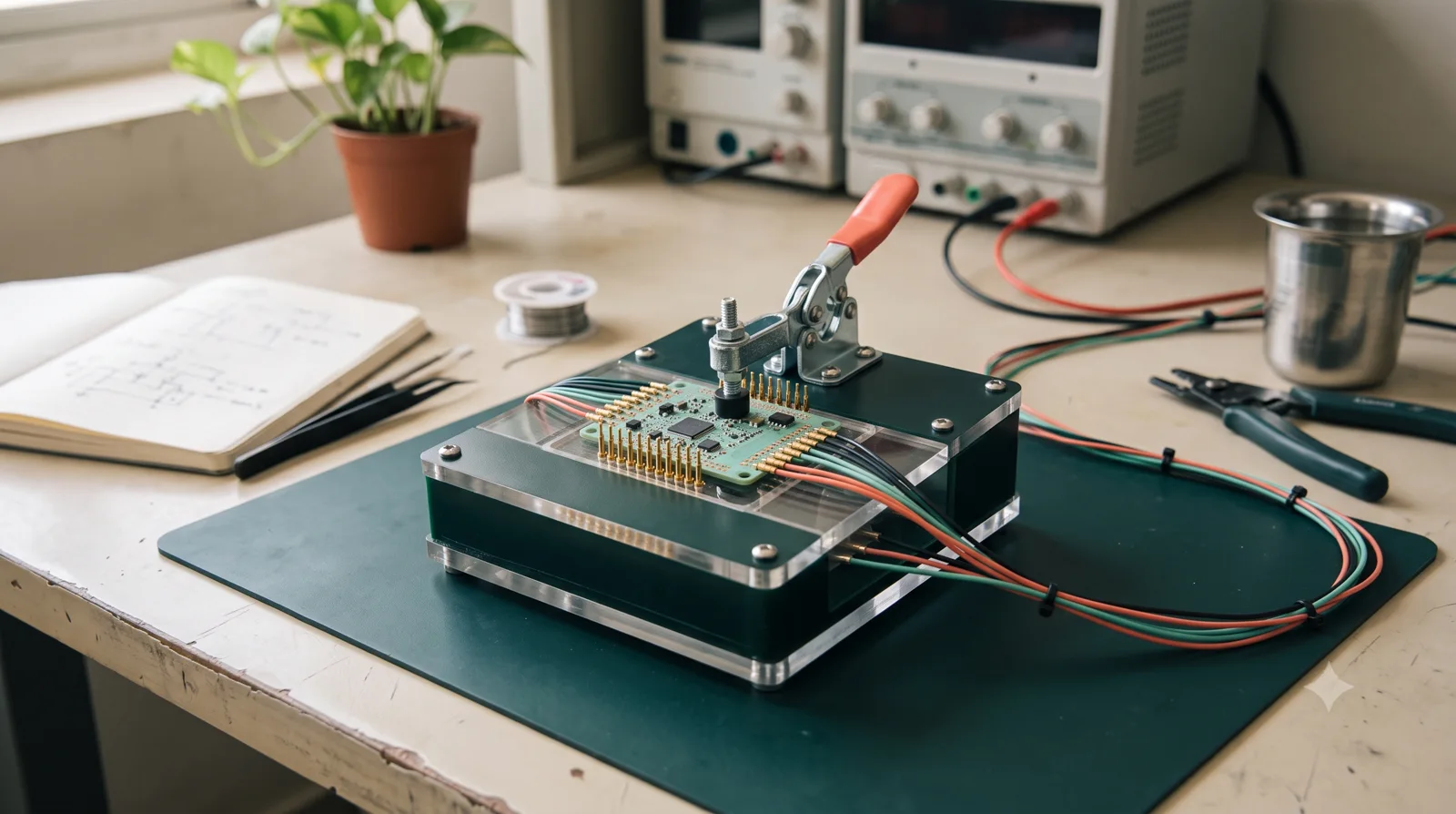
Ask how prototypes and checks are reviewed
A test claim is more useful when the conditions, configuration and result are understandable. Ask how the prototype or build would be assessed and how findings would influence the next action. The intended product requirements should guide that discussion.
- Relevant tests and acceptance criteria
- Configuration and test records
- How issues and limitations are recorded
- What must change before the next build
Review documentation and change responsibility
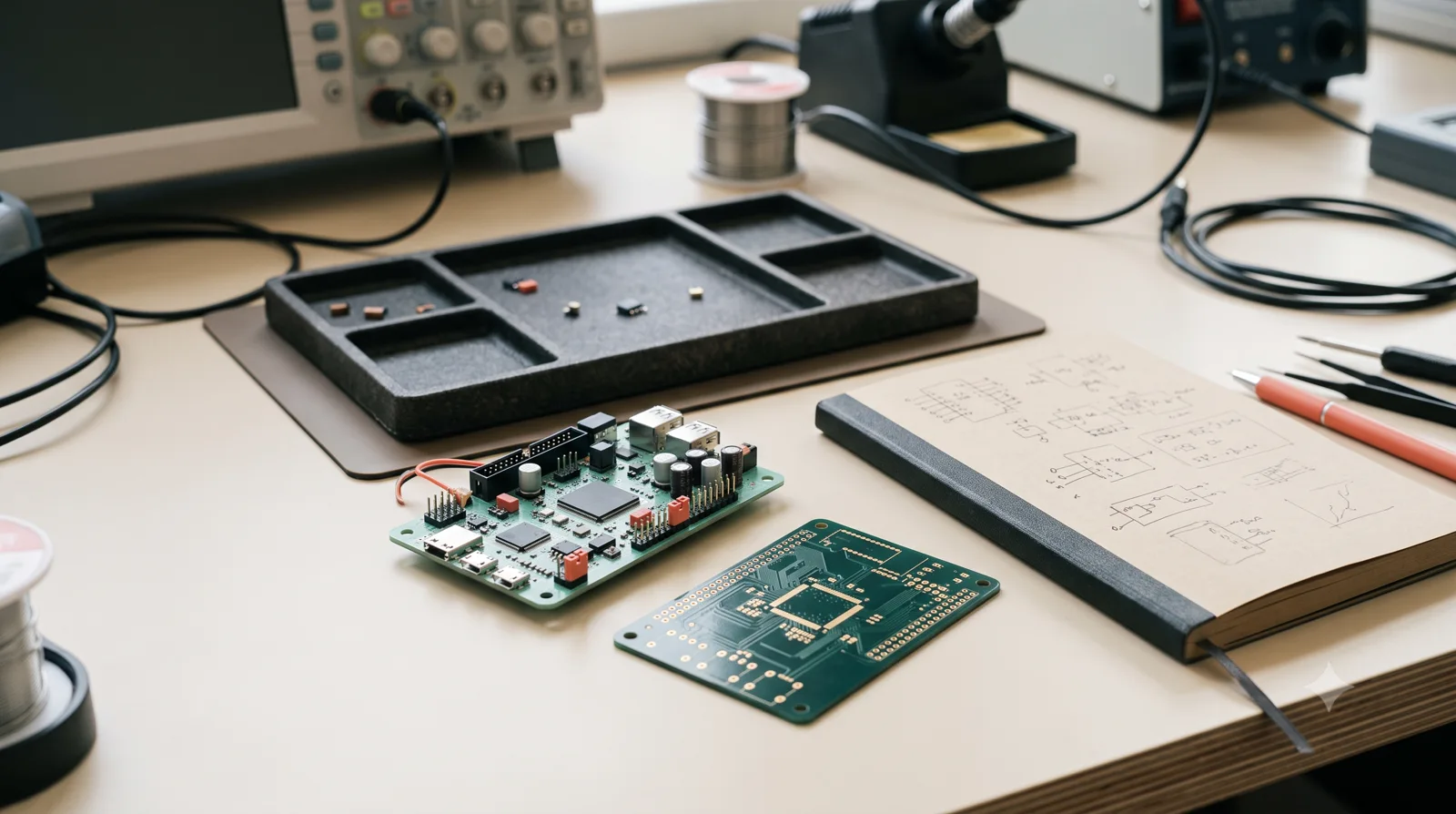
A useful handoff identifies the agreed design, component and build information. Ask how revisions, alternatives and future changes would be handled. Supportability depends on the information and responsibilities that remain after the first delivery.
- Agreed deliverables and versions
- Component and alternative decisions
- Assembly and test information
- Future support and change boundaries
Make the comparison concrete.
Use the same product requirement and build scope on both sides of the comparison. Ask for the information that helps your team make and support the decision.
| Compare | Ask or review | What the answer should clarify |
|---|---|---|
| Responsibility | Who owns each design/build workstream? | A clear scope and interface owner. |
| Prototype evidence | What was checked, and under which configuration? | Useful test records and visible limitations. |
| Handover | Which versions and files are included? | Agreed design, component and build information. |
| Change | How are later revisions and alternatives handled? | Documented review and support responsibilities. |
Questions about the next step
What is useful evidence when assessing an electronics partner?
Discuss the requirements review, design and build versions, component decisions, validation approach and handover information relevant to the intended product.
Should a supplier decision begin with price alone?
Compare the complete scope: design responsibility, component assumptions, assembly/test work, documentation and later changes. A price is meaningful when those boundaries are understood.
Continue your project
Make the next milestone a useful one.
Tell us what exists today, what needs to change and the decision your team needs to make. We’ll connect the discussion with the relevant engineering scope.