What must the next build prove?
Take a working prototype toward a product that can be tested, built again and supported. Each stage should answer a different question before the team increases its commitment.
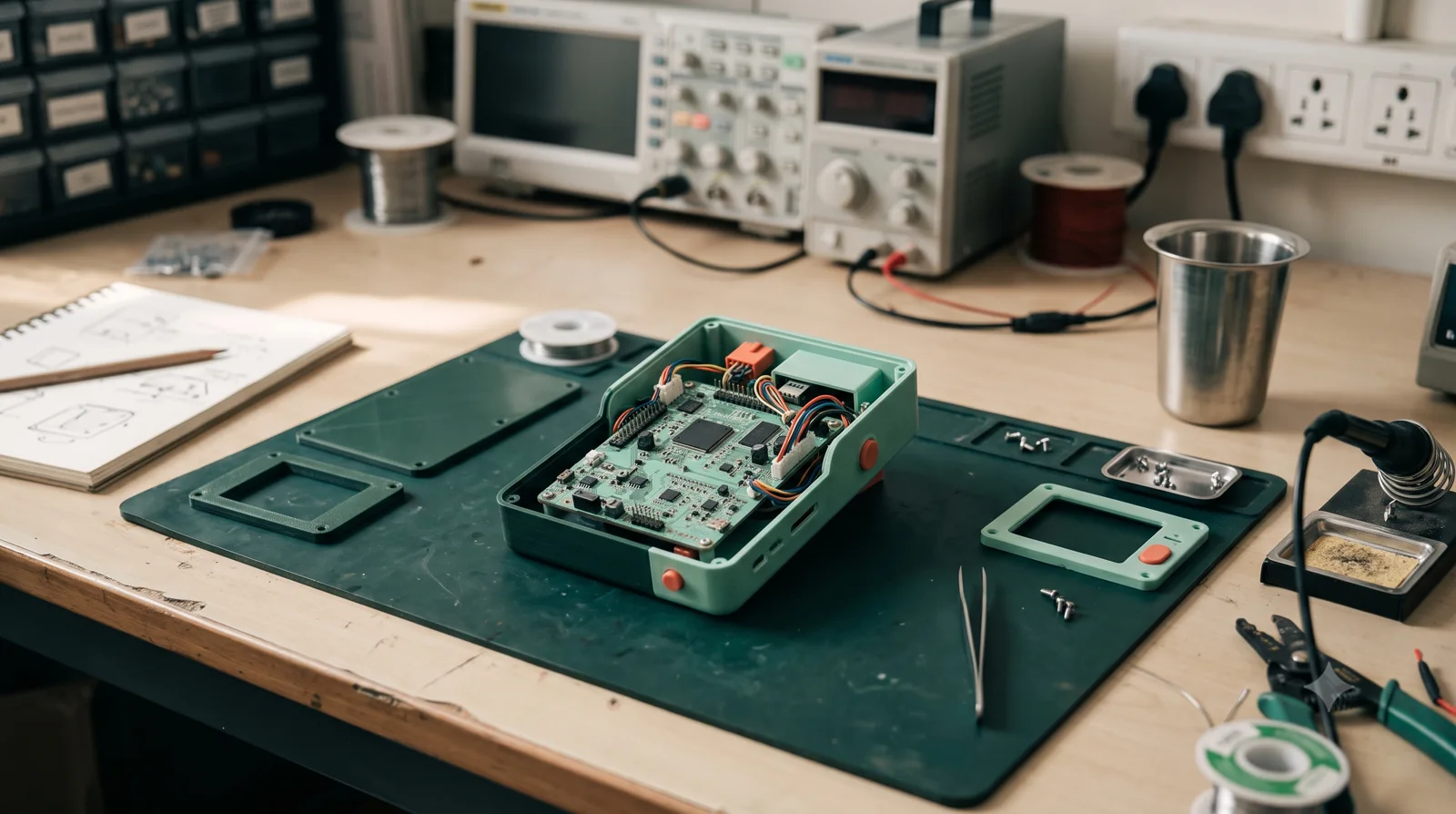
Review what the current prototype demonstrates
Separate the functions already checked from assumptions still open. Available design files, firmware versions, test observations and known issues help define the next useful engineering work. A convincing demonstration is valuable evidence, but its boundary should be clear.
- What works and under which conditions
- Design and firmware configuration
- Issues and unanswered requirements
- The next review or prototype objective
Plan the checks that matter to the product
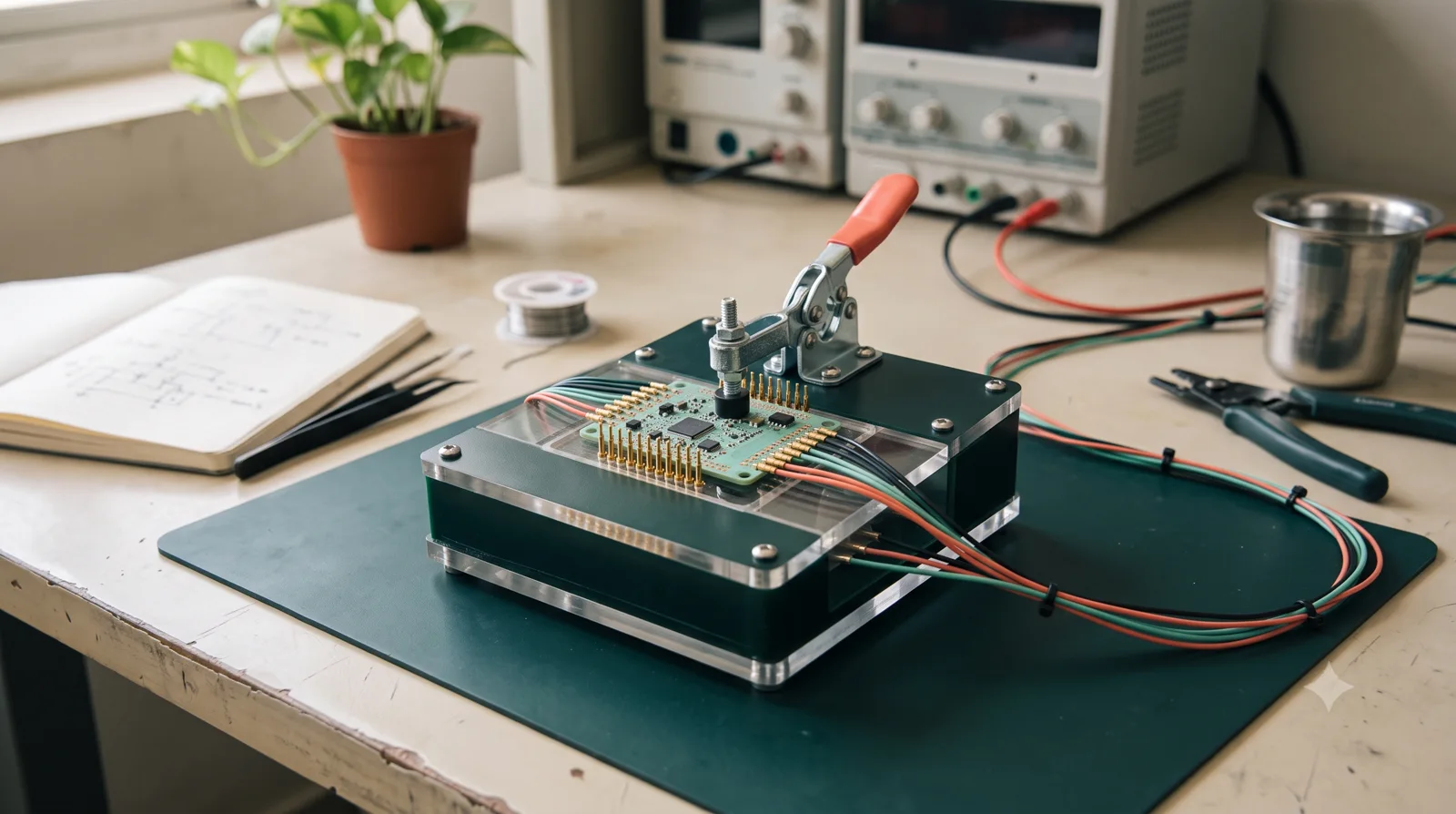
Define what needs to be assessed at system and manufacturing level. Test access, interfaces, operating scenarios and component assumptions should connect to the requirements and next decision. Agree the relevant review responsibilities and documentation.
- Requirement-based checks
- Product and interface behaviour
- Manufacturing and test-access questions
- Records, limitations and follow-up actions
Prepare a pilot and the next commitment
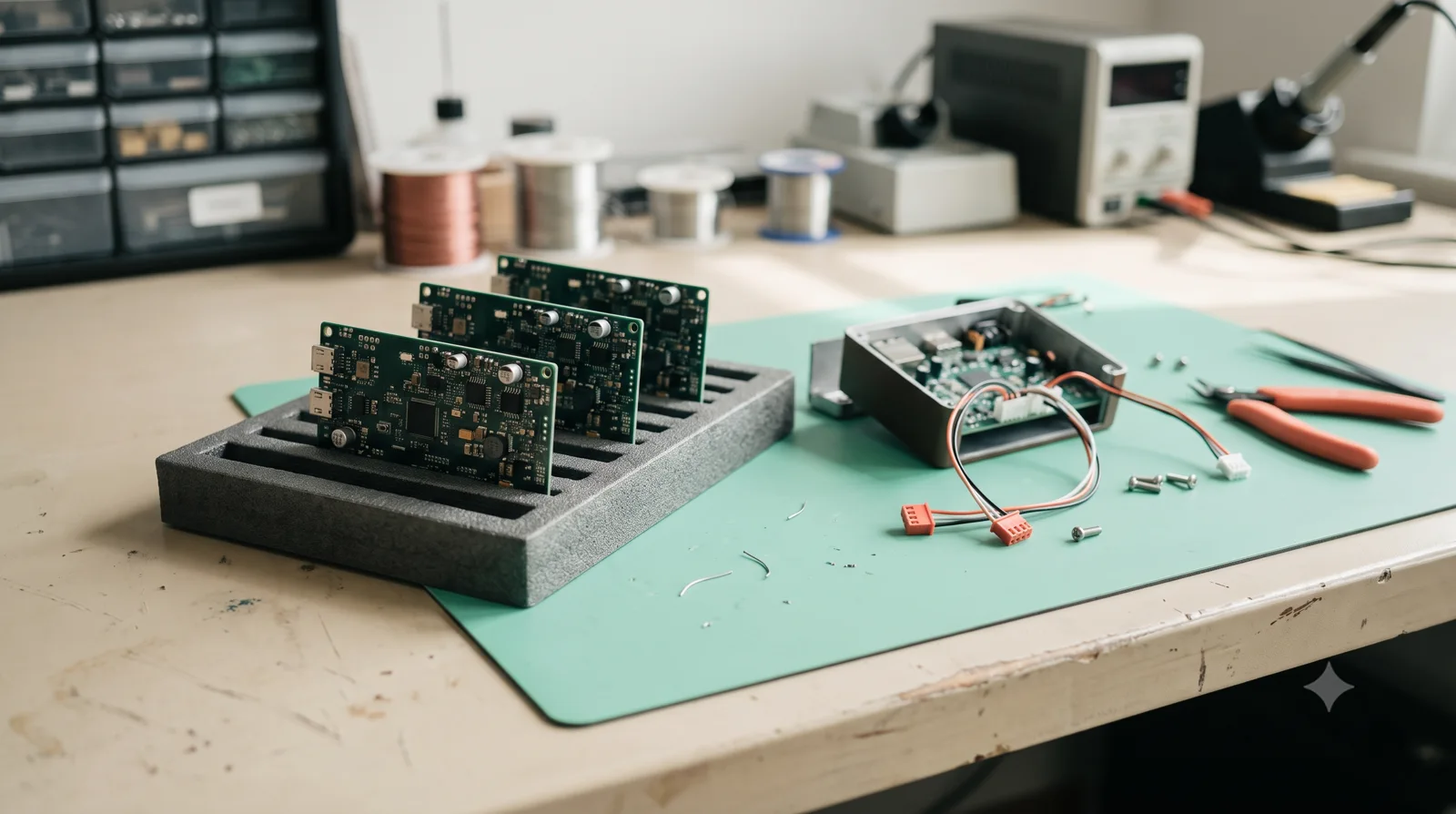
Use the pilot to understand the build rather than simply produce more units. Quantity, components, assembly information and acceptance checks should support a defined learning goal. Review the findings before deciding the next release or volume.
- Pilot build scope and assumptions
- Assembly and test findings
- Required design or process changes
- Readiness for the next build decision
Questions about the next step
What should a prototype prove?
Give it a defined question: basic function, an interface, integration behaviour or an operating constraint. Record the conditions and configuration so the result has a clear boundary.
When should quantity increase?
Use the design, component, assembly and test evidence to review readiness. The next quantity should follow the agreed learning or delivery objective and unresolved issues.
Continue your project
Make the next milestone a useful one.
Tell us what exists today, what needs to change and the decision your team needs to make. We’ll connect the discussion with the relevant engineering scope.